
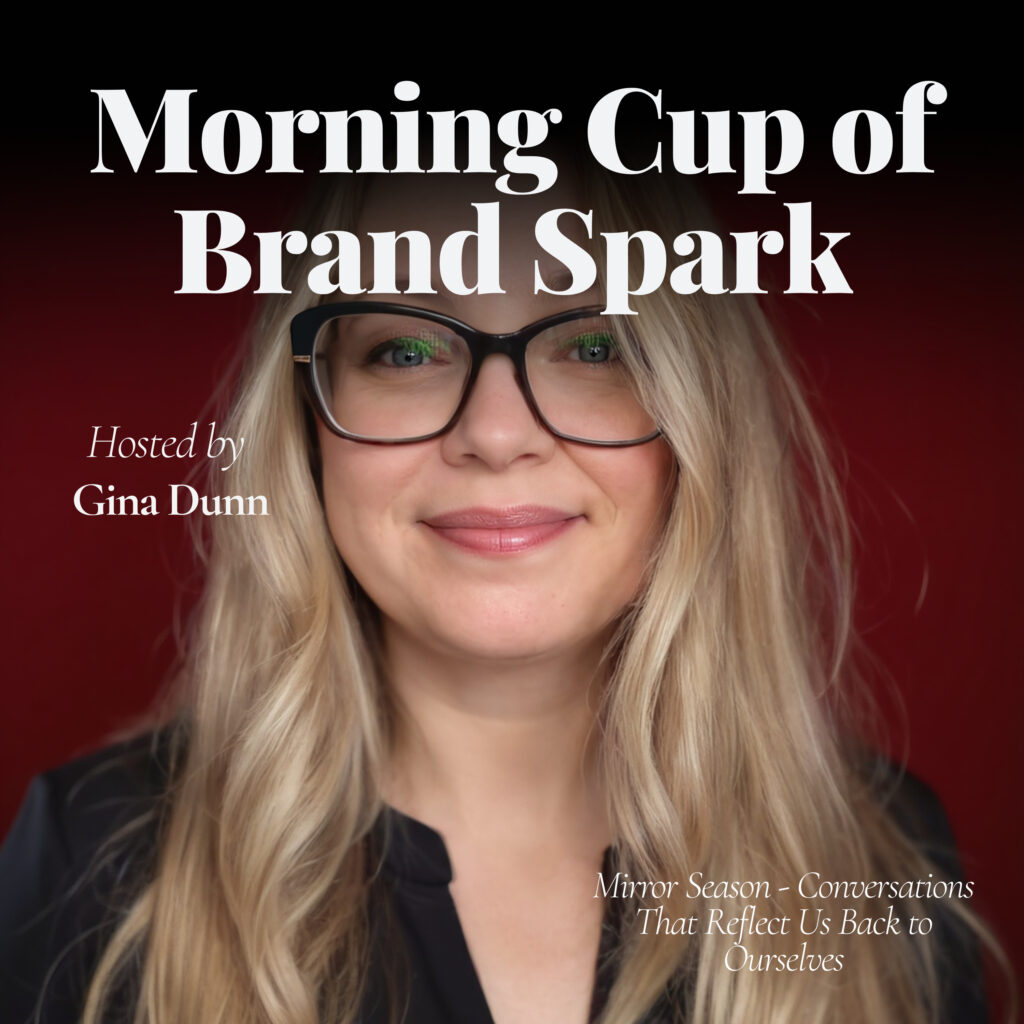
Episode 64: Your Design Isn’t the Proof — Your Voice Is
Your design might get attention.But your voice is what builds belief.Today’s Brand Spark cuts through the myth that aesthetic is proof — and explains why clarity, courage, and language convert way more than logos ever could.
Need voice-first strategy? Start here:https://ogsolutions.nl/brand-glow-up-audit/
"Your design says, hey, look at me. But your voice says, hey, trust me."
Full transcript
Your design might get attention, but your voice is what builds relief. Today's brand spark cuts through the myth that aesthetic is proof. And it explains why clarity, courage, and language convert way more than a logo ever could. You need a voice strategy. You need a voice-first strategy.
Good morning. You're listening to your morning cup of brand spark. And I hope you've got a coffee. I know I do. I'm Gina Dunn, founder of OG Solutions and your strategy first, sparkle second brand twin. Today is Wednesday, July 2nd. Let's begin with this. Design might open the door, but your actual own voice is what makes people stay.
Let's spark it up.
Let's first talk about what we think proof looks like. We often think that proof looks like a slick website, a gorgeous social media feed, or a polished proposal that we send out, or an amazing video or a photo shoot. Is that proof? But those things, they're confidence theater. They show tons of effort, but they actually don't show any impact.
your audience, they're not just watching, they're listening too.
Voices carry belief. Here's what actually builds trust. Saying the thing that no one else will, that gives a point of view. Naming the real problem, it's another really important one. Say it out loud. And speaking in a way that feels human, not chat GPT written or written by somebody who built your website.
Your voice is the actual fingerprint of your brand. And it's what tells someone, this brand, this company, this founder, this person, they actually get me. Your design is your decoration, but your voice is your proof. And the clearer your voice is, the faster belief builds with your audience.
your brand, it needs to sound like you. If someone hears you're on a podcast and then reads your website.
It should really feel seamless to them. It should have the same tone, the same courage, the same edge, the same friendliness. It shouldn't be that they feel like they speak to you, actually, and it's a different person.
Because in a sea of sameness, tone converts. Your design says, hey, look at me. But your voice says, hey, trust me. And that's why your brand has to start with strategy first. Because voice is built, not styled. So here's your spark check for today. Spark one. What part of your brand looks legit but sounds generic? Not like you.
Spark two, are you still relying on visuals to do the emotional labor of your brand? And spark three, what would shift if your voice got to lead your brand? Your voice isn't secondary, it's the signal and you need to tune it up. Good design will catch the eye, but good voice will capture the heart. And that's your brand spark for today. I'll see you tomorrow.
Key takeaways & FAQ
Five things to steal
- 01 Your voice builds trust faster than any visual design ever could.
- 02 Saying what no one else will is a genuine competitive brand advantage.
- 03 Design is confidence theater; voice is the actual proof of impact.
- 04 Brand consistency means your podcast tone matches your website copy exactly.
- 05 Voice is built through strategy, not styled through aesthetics or templates.
Frequently asked
According to brand strategist Gina Dunn, design gets attention but voice makes people stay. While a polished website or social feed shows effort, it doesn't show impact. Voice carries belief by naming real problems, sharing genuine points of view, and sounding human — which is what tells an audience 'this brand actually gets me.' Good design catches the eye, but good voice captures the heart.
A strong brand voice says the thing no one else will, names the real problem out loud, and sounds human rather than generic or AI-generated. It should feel seamless across every touchpoint — if someone hears you on a podcast and then reads your website, the tone, courage, edge, and friendliness should match so completely that it never feels like a different person.
Confidence theater refers to relying on slick visuals — polished websites, beautiful social feeds, professional photo shoots — to signal credibility. Gina Dunn argues these elements show effort but not impact. They can make a brand look legitimate without actually communicating anything meaningful, leaving the emotional and persuasive work undone because no real voice or point of view comes through.
Gina Dunn offers three diagnostic questions: First, what part of your brand looks legitimate but sounds generic — not like you? Second, are you relying on visuals to do the emotional labor your voice should be doing? Third, what would change if your voice led your brand instead of your design? If you can't answer these confidently, your voice strategy likely needs attention.
Liked this episode? Get my weekly semi-regular newsletter on brand and positioning.
One short read every few weeks. Just the sharpest thinking from the period, from me to you, in under five minutes.