
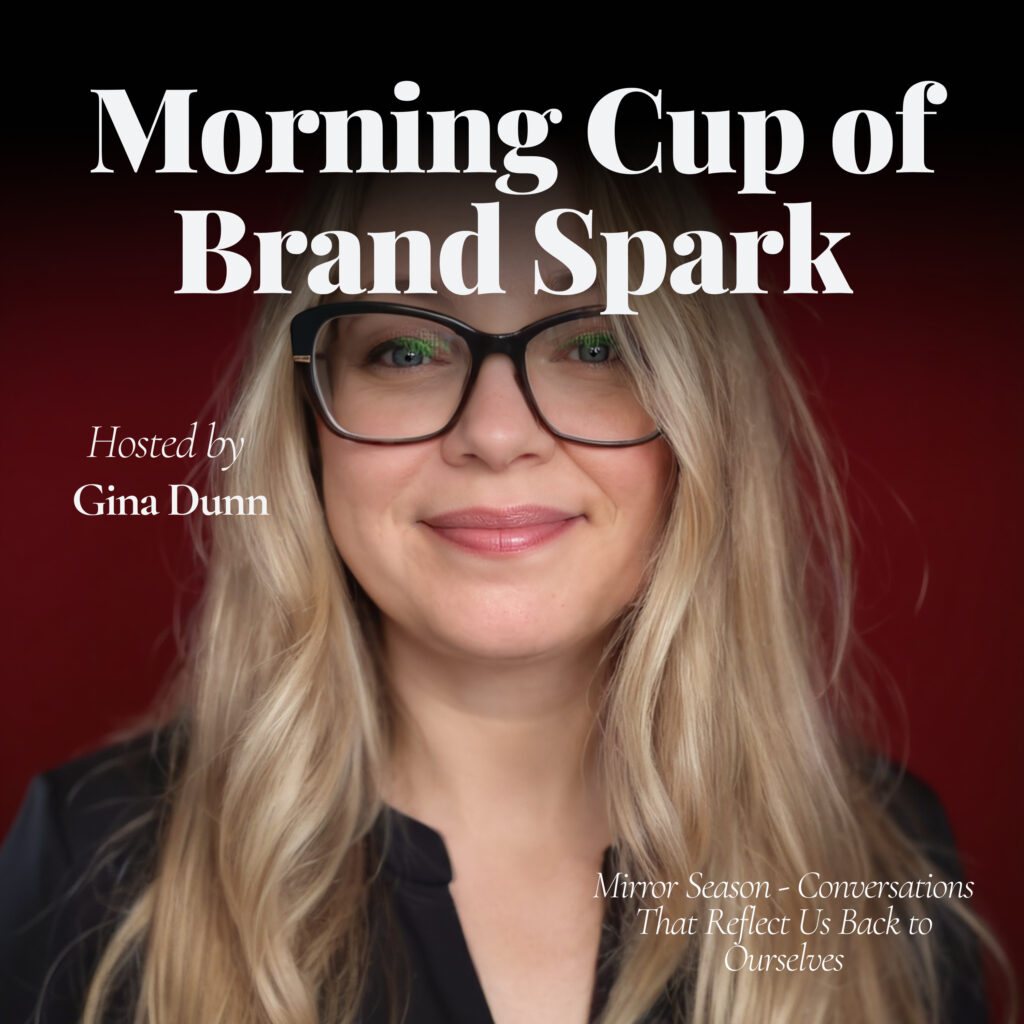
Ep 90 The Offgassing Phase — Shelley McIntyre on Life After the Corporate Mask
15 minutes | Reinvention | Identity | Clarity
What happens when the title stops fitting and you realize success was never your own reflection?
In this episode, Shelley McIntyre, founder of Burn the Map Coaching, joins Gina Dunn to talk about leaving corporate life, rediscovering identity, and the quiet rebellion of midlife reinvention.
After decades in corporate strategy and tech, Shelley McIntyre realized her success story wasn’t hers anymore.
Her mirror moment came with the cracks in a mask she’d worn too long — one that demanded she look, act, and lead like someone else.
In this Morning Cup of Brand Spark conversation, Shelley and Gina talk about:
The offgassing phase after leaving a long career
Grief and freedom in reinvention
The “corporate mask” women are told to wear
Finding your identity beneath ambition
🔗 Learn more about Shelley and Burn the Map Consulting → https://burnthemapcoaching.com
☕ Be a guest → https://www.ginadunn.com/morning-cup-of-brand-spark/
"There is this squishy artist under it all that I need to meet again. I think I had lost touch with her."
Full transcript
Today's guest is someone who knows what it's like to wake up one day and realize you've been living inside someone else's story. Shelley McIntyre is a reinvention partner for Gen X professionals, and she's the founder of Burn the Map Coaching. After a long career in corporate strategy and tech, she left the titles and the job behind to help others reclaim their identity and build something real.
Her mirror moment came when she realized that the corporate mask she'd worn for years simply no longer fit, and that true success meant rediscovering the person underneath the mask. This is a conversation about grief, identity, and the off-gassing phase that follows when you finally exhale the story that isn't yours anymore. So let's get started.
Shelley, welcome, welcome to Morning Cup of Brand Spark, Thank you for joining me today.
Thanks for having me, Gina.
Well, before we jump in, I'll ask you what I ask everybody. What's in your cup today?
I've got two cups. One has coffee and the other has water.
so you're double, double right now. But it's super early for you, where in the world are you?
Yep, double-fisting it.
I'm in Seattle, Washington, and the sun has finally come up. We're in the big dark, as we call it in the winter. But yeah, it's a lovely fall day today.
that's awesome. I haven't been to Seattle in, I want to say, more than 20 years now. But it was by far one of my favorite cities in the U.S. So it's definitely somewhere that I would live. It's awesome there. Beautiful. Well, I was really looking forward to speaking with you today and it's fun. I said this right before we hit record as well. We speak a lot of the same language.
Mm.
It's a good spot.
Yeah.
Me
with brand strategy, course, and you with career transformation for Gen X professionals. There's like a lot of parallels in holding up a mirror to yourself or for someone else to hold the mirror so they can see themselves a little bit more clearly. Right? But before we go into your mirror moment, I'd love to ask you a little bit about your business. You call it Burn the Map Coaching. I so love the name. I love it.
Right.
Pass.
Thank you.
What
does burn the map mean to you?
It means to me that, you know, a lot of people were told what path to follow when they were, you know, in high school and getting into college.
Mm, for sure.
And we were kind of led to believe that our careers would resemble the careers of the generation before us. So you go and you work your corporate career until you retire and then you retire and you play golf. Well, the Gen X people that you and I talk to, they kind of wake up one day and say, I don't want this, but maybe I never wanted this. And I don't want...
for sure.
the rest of my days to look like my parents. I don't even like golf. I don't even think I want to retire because I see what happens to people when they retire and they really fade away quickly. what is the path that I am supposed to be taking when I only have one model for it? So to me, burn the map is let's just get rid of that old plan and figure out what's right for you as an individual.
Hmm.
I very much agree. We are all individuals and what works for one of us is just not the same as the other. really have to think about that individuality. And for you, how did you know you were ready to take off your corporate mask yourself? Because you were in corporate for a while.
Yeah, that's right.
Yeah, I was in corporate for basically my entire career up to then about 25 years. And I, you know, we all have this corporate mask that we wear that is an adaptation to our surroundings and our situation and our role. And it really does help us. There's nothing wrong with having this corporate mask, but mine was starting to get cracks in it. So I was in this role where
I was kind of going by the seat of my pants a little bit. My heart wasn't in it anymore. And I was really doing this big investigation about what was actually meaningful to me about the job, about my own life. And the job that I was in, which looked amazing on paper, I was starting to get really dissatisfied with. And...
and it was getting harder to show up to work. And I noticed that some of my coworkers were like, what is she still doing here? Yes. I got a little bit of feedback that it was like, hey, you need to step it up a little bit. And I didn't want to. And I was in a really, yeah, and I was in a really senior position and
Really? Did everyone say anything to you?
No. Ugh. Yeah, but then you know.
That's when kind of the little bird on the shoulder was like, hey, it's time to go. So I gave a really like a six months notice because it was going to take a lot of unwinding because I might, know, my fingers were in all parts of that business. So we gave a lot of notice and you know, I plan to take a big break and do some exploration and figure out the next thing, maybe the next job I didn't know yet.
Yeah.
And then my last day was in the first week of the COVID-19 lockdown. Mm-hmm. Yeah.
⁓ really?
Oof, but then you're like, what do I do now? Also, what was that feeling like?
Yeah,
it was wild. It was a wild time to be set free from the corporate world because that world itself was turning upside down. Everybody went home. Everybody had to figure out what Zoom looked like. And at the same time, like the break that I thought I was going to take, you know, it all changed. I wasn't gonna be traveling. I wasn't gonna be like...
getting involved with new in-person hobbies, none of that was going to happen. So reinvention was like this big crash course.
Yeah.
there any grief in that decision at that moment? Or was there only relief or was there also some grief? Yeah.
Well, it's funny that you say grief because,
you know, I had been doing some investigating for several months prior, actually probably almost a year prior, about where those meaningful conversations were happening. And it led me through like experiential marketing and immersive theater. And I was doing all this investigating and where it landed me was with the death care community.
And I met all these great people. I went to a conference called End Well in San Francisco with all these death care innovators and death doulas and grief coaches. And I started meeting all these amazing people. And some of them were like, Shelley, what you can do pretty quickly is go get trained in this methodology to help people through grief. And so I had that in the back of my mind. And then when
I left and COVID lockdown happened. A month later, I was like, well, guess I can get some training online.
and I did some
training as a grief coach and that was my first venture out into entrepreneurship was doing grief coaching during COVID.
Huh, cool.
But I can imagine that applies to a lot of different things when you're working with individuals who are indeed looking for some reinvention. That's awesome.
Yeah. And a lot of people came to me at first, you know, navigating the loss of a person or a marriage. And what I found was that after a while, some of them would say, you know, I, we've done this program together and I feel better. And now I want to make bigger changes in my life. So now what? you know, recovery from one type of loss can
See ya.
⁓
bring into sharp relief the other parts of your life. And you start looking around with more discernment saying, what else is broken? What else is not working for me anymore? And can I bring those changes in as well? Like change is a magnet and it wants other changes to come with it.
And what did you learn about yourself in that quiet moment where you were forced to in a way?
Well, this is, I mean, this is very related to the mirror moment that you talk about a lot, which is like that mask that I was wearing where, you know, I had these business suits and harsh skirts and I wore a lot of black and my hair was very harsh. And what I realized is like, that's not actually me. That was part of the adaptive mask and it worked for me.
Yeah.
But there is this squishy artist under it all that I need to meet again. I think I had lost touch with her.
Cool. ⁓
Yeah, and then unleash that again.
Yeah, absolutely.
Definitely that's different when you're in corporate. It's very much... You play the part, right? You look the part, you play the part and you're not gonna get the corner office if you don't.
Yeah, sure.
Mm-hmm.
Yeah, and we're from the generation that taught the women, well, you just have to be and look and act like a man, right? You just have to have these masculine, high testosterone qualities to get ahead in the corporate world. And that's so restrictive. Yeah.
Mm-hmm.
Mm-hmm. It is. Have you
read the book, Nice Girl's Don't Get the Corner Office? It was a great and a horrible book at the same time. It's the kind of book that explains. And some of it is a bit sarcastic, right? But the advice is you're not going to move up, or you're not going to get that job that you've always wanted if you are baking muffins for your team in the morning.
No, that sounds great.
Yeah?
read the book and this was mid-career for me when I read it and I was known for actually baking muffins and bringing them into the Dutch company I worked for. And it's one of the only books I actually kept because I highlighted that and I kind of put a big F you next to it. Like that is me and I will not change who I am to conform into that.
Mm.
Hahaha!
Yeah
Yeah.
So it was an eye-opener because it really does try and put you into a box, into the masculine male box of this is what's expected of you as a woman.
I contracted at a big tech company for several years. And what I observed there is that the women who are in positions of power all came across as so mean. Like, it was such a bummer. And I knew that they were good people and I knew that they were adapting to their environments and what they believed was required of them. But...
Yeah!
Mm-hmm.
But it made it clear to me that like, I can't play here legitimately. This is not my world. Mm-mm.
No, you will never be yourself in
that environment. So you had this moment of the mask, right? Of taking off the mask and realizing who you really were at that age. And that's of course what you're helping other people do now. How does that feel that you're able to actually bring that to others?
Yeah.
Yes.
It's delicious. Like these conversations that I have with people where they really get reacquainted with their underlying values, the essence of who they truly are, what dreams they have buried that they can revive. When they have these realizations and start acting on it and start practicing,
Ha ha, beautiful word.
a new way of being, which is really their true way of being. It's such a relief for everybody.
you work with people now who are in that process of reinventing themselves after, for some people, likely decades in corporate or decades conforming, right? What is one truth that you wish more of them knew?
Yep.
That there is life outside of corporate and that there are careers that they can build using the skills they already have.
Like we're not talking about burning it all down. You can plan if you're still in a job, you can start to reinvent yourself now before you even leave. Like it doesn't have to be a scary cliff that people are going to jump off. And you also, it's like, you know, the fish that doesn't know that the fish is in water, right? You have...
Indeed.
You
have all of these skills and these capacities that you might not even know that you have. So one thing that I think is very effective is to go out and ask other people what you're good at, because you're swimming in it all the time. You have no idea that your ability to analyze large swaths of data or make discerning choices about teams, like you don't
You don't even know that that's a thing. But everything that you can do is a thing.
I always, I,
it is, and I always say you can't smell your own house. If you walk into someone else's house, you can totally smell it. But that person, they don't smell anything anymore. I can't tell you how many times somebody visits and I spray my rituals or whatever spray down. And then I don't smell anything. And they walk in and go, wow, it smells so good in here. Like, what is that scent? Like, I don't smell anything. It is, it is that concept, right? You, don't see.
Yeah, I love that.
Yeah!
You
Yeah.
Yep.
And having somebody else mirror that for you is so powerful.
Yeah, I love that concept that you're you're nose deaf to your own skills.
Yes, yes, totally.
And it really is true. You don't see it, you don't notice it. And I have to say also as women and as well, people in our generation, We are harsh on ourselves and we judge ourselves so much in a way that we really shouldn't and people don't see us that way.
Yeah.
That's exactly right. And this is why I do this big essence exercise with every single client that comes my way, where we do have them go out and gather evidence. People, yeah, like they go out to their friends and colleagues and family members and say, when I'm operating at my best, what am I like? And people will tell the most beautiful stories about that person.
Input, yeah.
Like here's a moment or a story that I feel is exemplary of who you truly are, John or Moira, right? Like you showed up in this moment and nobody asked you, you organized all of this stuff, you were so selfless. And then the clients are like, I guess I am like that because I have evidence. It's not like me fluffing them up.
Yeah.
No way. It's so beautiful. And then we can keep coming back to that. I usually take all of those stories and I distill them into five words. And then we can use that as this touchstone. Like, okay, if you're gonna make a decision or if you're gonna explore a future career, you're gonna start a business, if you could come from that place of full essence, what choice would you make?
What a realization, my.
And if you could tell yourself, your younger self, let's put it that way, one thing, one thing about success, what would that be?
Yeah.
I think it would be, it doesn't look like your dad's success.
You don't have to follow that path.
You can forge your own.
Yeah, exactly.
Give yourself permission, I think many people just don't.
Well, they wait. They wait for other people to give them permission. And then they are dismayed to find that it's not coming.
I love what you're doing. I think it's so important. A lot of people, especially women, feel like they're stuck or they feel unhappy or they feel, don't know what to do with myself now, but it's not over for everyone. Listening, this is the perfect moment for you to reinvent. It's awesome.
Yeah.
Absolutely.
Shelley, thank you so, so much for joining me. Is there anything that you'd like to say before we head out and where can people find you?
thank you. Yes. I also have a podcast mine. It's called Burn the Map and that is available wherever fine podcasts are sold. And people can find me on my website, is burn themapcoaching.com.
Yay.
Thank you so much. I wish you an awesome rest of your morning and I'm off to make some dinner.
Thanks so much, Gina.
Well, that was Morning Cup of Brand Spark a reminder that clarity doesn't always mean certainty. Sometimes it just means taking off the mask so you can breathe again. thank you to Shelley from Burn the Map Coaching for reminding us that reinvention isn't about burning bridges. It's actually about burning the map so you can finally find your very own way.
If this conversation made you pause, share it with someone who might need to hear it today. Until next time, keep your coffee warm and your clarity close.
Key takeaways & FAQ
Five things to steal
- 01 Ask colleagues what you're good at — you're nose-deaf to your own skills
- 02 Reinvention doesn't require burning it all down, start planning while still employed
- 03 Women were taught to adopt masculine high-testosterone qualities to succeed in corporate
- 04 Change is a magnet and attracts other needed changes into your life
- 05 Success doesn't have to look like your parents' model — forge your own path
Frequently asked
The corporate mask is an adaptation to your work surroundings, role, and situation that helps you succeed but isn't your authentic self. You know it's time to remove it when cracks start appearing — when your heart isn't in the work anymore, showing up becomes harder, and you find yourself investigating what's actually meaningful to you. For Shelley McIntyre, it manifested as going through the motions in a role that looked amazing on paper but left her dissatisfied, prompting feedback from coworkers that she needed to step it up when she no longer wanted to.
You don't have to burn everything down or jump off a cliff to reinvent yourself. If you're still in a corporate job, you can start reinventing yourself now before you even leave. The key is recognizing that there is life outside of corporate and you can build new careers using the skills you already have. Planning your transition while employed allows you to explore what's meaningful to you, gather evidence of your strengths from colleagues, and test new directions without financial panic.
The essence exercise involves asking friends, colleagues, and family members to share stories about when you're operating at your best. People will tell beautiful stories about moments that exemplify who you truly are — times you showed up without being asked, organized things selflessly, or demonstrated unique strengths. These stories provide evidence of your capabilities that you can't see yourself because you're swimming in them constantly. The stories get distilled into five words that serve as a touchstone for making decisions about future careers or businesses from a place of full essence.
You're like a fish that doesn't know it's in water — you're surrounded by your own abilities constantly so you can't recognize them as special or valuable. Your capacity to analyze large amounts of data, make discerning choices about teams, or organize complex projects seems ordinary to you because you do it every day. This is why asking other people what you're good at is so effective. They can smell your house when you can't, identifying the skills and qualities you're nose-deaf to because they're so natural to you.
Liked this episode? Get my weekly semi-regular newsletter on brand and positioning.
One short read every few weeks. Just the sharpest thinking from the period, from me to you, in under five minutes.