
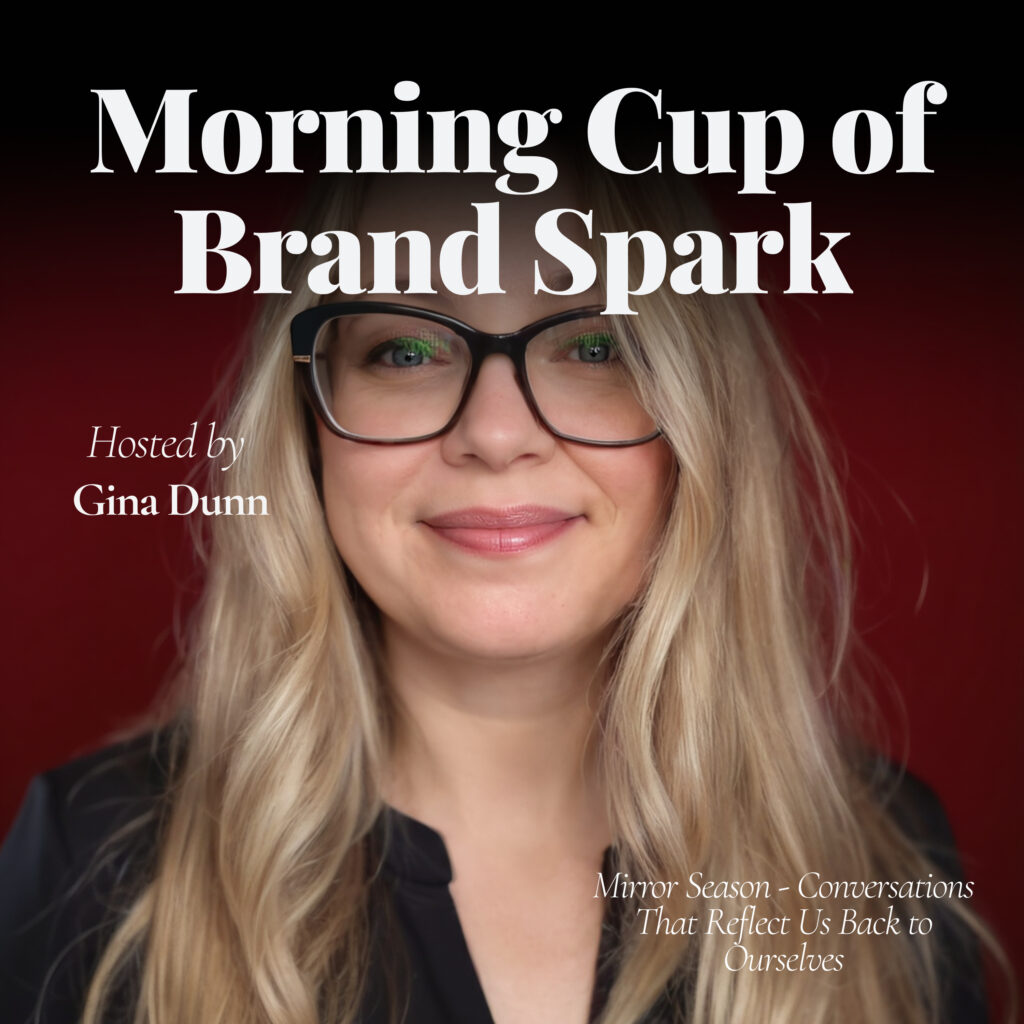
Your Offer Isn’t Clear (And That’s Why It’s Not Converting) – EP22 (May 20)
Struggling to sell even though you know your work is powerful?
It’s probably not your marketing — it’s your offer.
This spark breaks down the 3 clarity killers that confuse buyers… and gives you one simple fix to start converting with confidence.
Discover more:
👉 Take the Brand Glow-Up Audit Toolkit — and get clarity on what’s working, what’s not, and what to fix first. [click here]
🧠 Find your biggest brand gap: What’s Your Brand Blocker? Quiz — fast, free, freakishly accurate. [click here]
🎙️ Like spicy marketing convos with AI + bold branding? Tune into my video podcast with Natalie: BrandedAF → [click here]
📬 Get my juiciest takes every month in the Brandology LinkedIn Newsletter — follow here → [click here]
💬 DM me your spark from today’s episode — I read every single one. Seriously.
🤝 Let’s connect on LinkedIn — drop me a note and tell me what you’re building → [click here]
🚨 Feeling stuck or scattered? Book a 1:1 Clarity Call with me — we’ll find your brand’s backbone and make it work smarter. [click here]
"Your price is not just a number, it's a signal. It tells people how confident you are in your offer."
Full transcript
Alright, episode 24. This one's your money clarity mic drop, because you can't build a bold bankable brand if you're afraid to say your price out loud. If your throat closes every time someone asks how much is it, then this episode is for you. Today's spark is about what your price actually communicates, and I'm not talking about just the numbers here. Let's rebuild your confidence, own your value,
and stop lowballing your brilliance.
Welcome back to Morning Cup of Brand Spark. Today is Thursday, May 22nd, and I'm Gina Dunn, founder of OG Solutions. This episode, we're talking about pricing, but not just how to sell it. I'm talking about how to say it without flinching, without shrinking, and without over-explaining, and without feeling gross. Because price, that's power. So let's spark it up. Let me say it loud and clear.
Your price is not just a number, it's a signal. It tells people how confident you are in your offer. It tells them how to treat your time. And it tells you whether you're playing small or finally owning your brilliance and worth it. If you choke, if you discount, if you apologize, or if you fill the silence when you say your price, you've got a pricing confidence problem and not a strategy one.
So here's your spark pricing confidence isn't just about math. It's about self concept because if deep down you think you're not quote there yet, or you're worried people will think that you're greedy or you're too expensive or you're scared that they'll say no, you'll subconsciously sabotage your own sales process. And you'll do this every time. Let's break down the three pricing confidence killers.
Confidence killer one, over explaining. If you feel the need to justify every Euro or every dollar in your price proposal, you're already shrinking. And the same thing goes for if your price proposal is 65 slides, you lost them after the first five. Confidence killer number two, discount spirals. Quote, if that's too much, I could, dot, dot, stop doing that.
Say the price and then be quiet and wait. Confidence killer number three, pricing based on fear, not based on value. If your rate was set by what if they say no in your head instead of this is what this price project is worth, you've already undercut yourself. So here's what to do instead. Price the result, not the minutes.
Practice saying your price out loud until it feels like a fact and not a maybe. And stand in your value, not in their wallet because you don't know what's in their wallet. So what if you raised your prices? What would happen then? Would you immediately panic? Would you start spiraling out of control?
What if you start saying out loud your new pricing to people? What if you practiced it? If you practice it, you build confidence around it. So one, then when you have a call, the client will say yes without blinking. And then you'll realize, know what? It wasn't the price. It was the way that you said it. So here's your spark check. Spark one. Do you flinch or ramble after saying your rate?
Two, is your pricing a reflection of your value or of your fear? And spark check three, would you feel confident buying from someone with your pricing energy or your pricing strategy? How would you feel if roles were reversed? So that's your spark for today. You don't need to explain your price. You need to believe it and be confident in it.
completely unequivocally confident in your price because you are worth it. You don't need to explain your price. You need to believe it. And tomorrow we're breaking you out of this time for money trap. If you're still selling hours, billable hours, or you're making your price really based on hour by hour by hour, instead of the results that your client will get, don't miss tomorrow's episode. Hit follow if you haven't already, drop me a five star review or comment, would love to hear from you. Talk soon.
Key takeaways & FAQ
Five things to steal
- 01 Price communicates confidence; flinching or apologizing signals you don't believe in your value.
- 02 Over-explaining your price in a 65-slide proposal loses clients after slide five.
- 03 Stop discount spiraling mid-conversation — say your price, then stay silent and wait.
- 04 Set rates based on the result you deliver, not the minutes you spend working.
- 05 Practice saying your new price out loud until it feels like a fact, not a maybe.
Frequently asked
According to Gina Dunn, pricing confidence is rooted in self-concept, not strategy. If you secretly believe you're not 'there yet,' worry about being seen as greedy, or fear rejection, you'll subconsciously sabotage your own sales process every time. The three main confidence killers are over-explaining your price, spiraling into unsolicited discounts, and setting rates based on fear of a 'no' rather than the actual value delivered.
Gina Dunn recommends stating your price and then simply staying quiet. Over-explaining or building an excessively long proposal — she notes that if your price proposal is 65 slides, you've lost the client after the first five — signals that you're shrinking and lack confidence. The goal is to treat your price like a fact, not a negotiation opener, and to resist filling the silence after you say it.
Pricing based on fear means your rate was set by the question 'what if they say no?' in your head, which leads to undercutting yourself before the conversation even begins. Pricing based on value means anchoring your rate to what the project or result is actually worth to the client. Gina Dunn advises entrepreneurs to price the result, not the minutes, and to stand in their own value rather than guessing what's in a client's wallet.
Gina Dunn explains that repeatedly saying your new price out loud builds genuine confidence around it. When you practice until the number feels like a fact rather than a maybe, clients are more likely to say yes without hesitation. She notes that when a client does say yes easily, entrepreneurs often realize it was never about the price itself — it was about the energy and confidence with which the price was delivered.
Liked this episode? Get my weekly semi-regular newsletter on brand and positioning.
One short read every few weeks. Just the sharpest thinking from the period, from me to you, in under five minutes.